Iran’s Wetlands
Iran’s Wetlands: A Journey Through the Blue Heart of a Dry Land
When people imagine the natural landscapes of Iran, they often think of vast deserts, rugged mountains, ancient forests, or the turquoise waters of the Persian Gulf. Yet some of the most important and fascinating ecosystems of the country are found where land and water meet: Iran’s wetlands.
From the lush Anzali Wetland on the southern shores of the Caspian Sea to the vast marshes of Shadegan in Khuzestan, from the mountain lake of Zarivar to the internationally important Gavkhouni Wetland, Iran’s wetlands form a remarkable network of habitats that support birds, fish, amphibians, reptiles, aquatic plants, and countless other forms of life.
For a country dominated by arid and semi-arid climates, wetlands are particularly valuable. They are not simply bodies of water. They are dynamic ecosystems that regulate water, support biodiversity, provide food and livelihoods, and offer some of the best opportunities for birdwatching, wildlife tourism, nature photography, and ecological tourism in Iran.
Today, Iran has 27 Wetlands of International Importance (Ramsar Sites) covering more than 1.49 million hectares. Iran joined the Ramsar Convention in 1975, while the Convention itself had been adopted in the Iranian city of Ramsar in 1971.
What Makes Iran’s Wetlands So Important?
A wetland is an ecosystem where water is a major factor controlling the environment, vegetation, and animal life. Wetlands can include lakes, marshes, swamps, shallow waters, floodplains, estuaries, and other naturally or seasonally waterlogged landscapes.
Their importance is enormous. Wetlands are among the world’s most productive ecosystems and provide essential services such as water regulation, flood reduction, habitat provision, nutrient cycling, and support for biodiversity.
In Iran, their importance becomes even more obvious because freshwater is limited across much of the country.
A wetland can therefore function as a kind of ecological oasis—a place where water creates conditions for life that may be impossible in the surrounding dry landscape.
Iran’s Wetlands and Migratory Birds
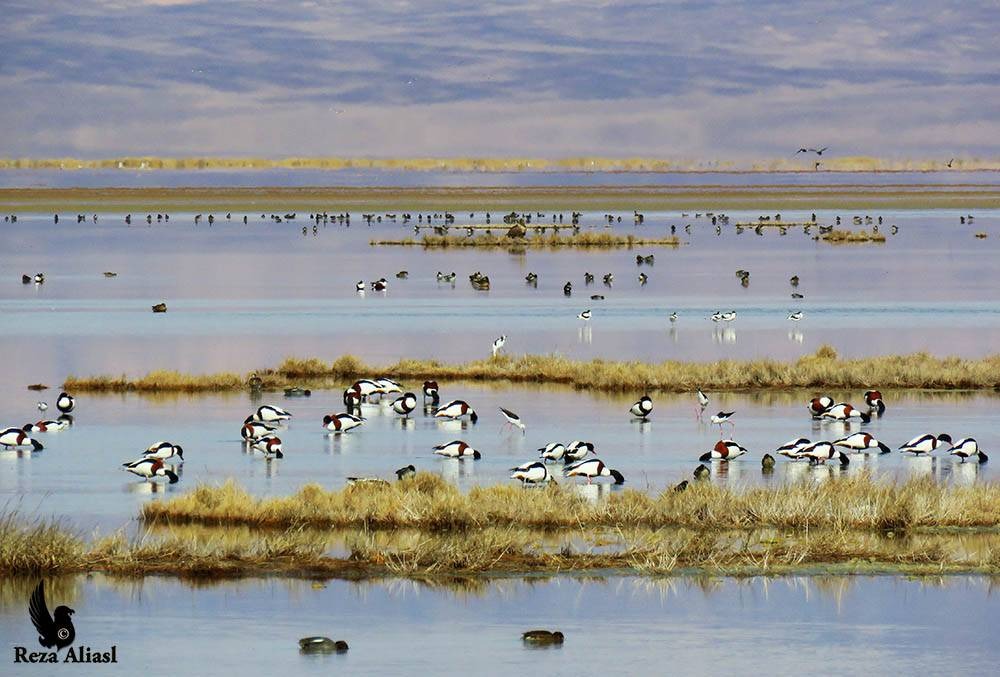
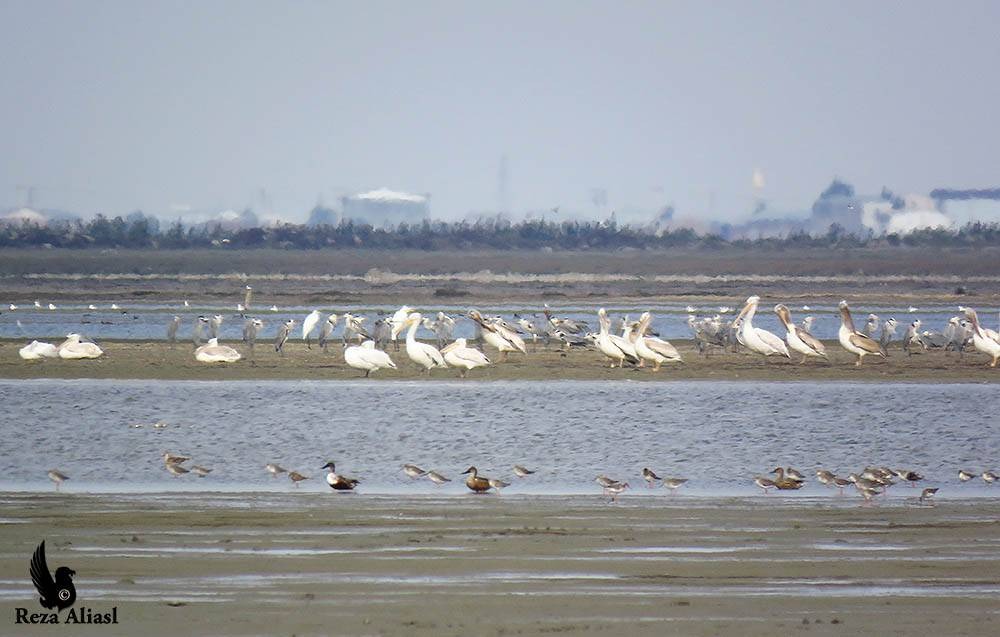
One of the greatest natural spectacles associated with Iranian wetlands is the arrival of migratory birds.
Iran lies along important migration routes connecting breeding grounds in northern Eurasia with wintering areas farther south. Wetlands across the country provide places where birds can rest, feed, breed, and survive seasonal migrations.
Species associated with Iranian wetlands include ducks, geese, herons, flamingos, shorebirds, and many other water-dependent species.
For birdwatchers, this makes Iran particularly interesting. A carefully planned wetland journey can combine observation of migratory birds with experiences of very different landscapes and cultures.
Some Iranian Ramsar Sites are specifically recognized for their importance to migratory birds. Zarivar Wetland, for example, provides important wintering habitat for northern migratory birds, while its reed beds offer breeding and resting habitat for wetland fauna. Ramsar records 74 bird species from the site.
Anzali Wetland: A Symbol of Iran’s Caspian Nature
Among Iran’s most famous wetlands, Anzali Wetland occupies a special place.
Located in Gilan Province along the southern Caspian coast, Anzali is a coastal lagoon and one of Iran’s best-known wetland landscapes. Its network of shallow waters, channels, marsh vegetation, and aquatic habitats creates an important environment for migratory birds and other wetland species.
The wetland is also deeply connected to the culture and livelihoods of surrounding communities. Traditional management practices have historically played a role in the sustainable use of wetland resources. Ramsar documentation describes the traditional “Abbandan-dari” system around Anzali, reflecting the long relationship between local communities and wetland landscapes.
At the same time, Anzali illustrates one of the major challenges facing wetlands around the world: ecological degradation. The Ramsar Convention identifi
es the wetland as requiring restoration, demonstrating that even internationally recognized wetlands need active conservation and long-term management.
For visitors, Anzali remains an exceptional destination for boat-based nature experiences, birdwatching, landscape photography, and exploring Caspian wetland ecosystems.
Miankaleh: Where Wetland, Coast, and Wildlife Meet
On the southeastern shore of the Caspian Sea lies another internationally important landscape: the Miankaleh Peninsula, Gorgan Bay and Lapoo-Zaghmarz Ab-bandan Ramsar Site.
This complex combines coastal, lagoon, shallow-water, and wetland habitats, creating an important refuge for birds and other wildlife.
The landscape demonstrates one of the most fascinating characteristics of Iranian wetlands: they often form ecological mosaics rather than existing as isolated bodies of water. Open water, mudflats, reed beds, coastal vegetation, and surrounding terrestrial habitats may all occur within a single wetland complex.
For wildlife travelers, this means that one destination can offer several different habitats and a wide range of species.
Shadegan Marshes: A Vast Wetland Landscape in Southern Iran
In southwestern Iran, the Shadegan Marshes represent one of the country’s most extensive wetland systems.
The Ramsar Site includes the marshes together with mudflats and associated coastal habitats. The site is important not only for biodiversity but also for the livelihoods of local communities.
The landscape is dramatically different from the humid wetlands of northern Iran. Here, wetland habitats occur within the hot environment of Khuzestan, demonstrating how wetlands can exist in very different climatic settings.
The interaction between water, reeds, open marsh, mudflats, wildlife, fisheries, and human communities makes Shadegan an especially interesting destination for travelers interested in ecology, traditional livelihoods, birdwatching, and wetland conservation.
Gavkhouni: A Wetland in the Heart of the Iranian Plateau
One of Iran’s best-known inland wetlands is Gavkhouni Lake and the marshes of the lower Zayandeh Rud.
Located in central Iran, Gavkhouni demonstrates the extraordinary contrast between a wetland and the surrounding dry landscapes of the Iranian Plateau.
It is also one of Iran’s oldest Ramsar Sites, designated in 1975. The site is recognized for its importance as habitat for migratory and resident waterbirds.
Gavkhouni is a powerful reminder that in arid regions, wetlands can be exceptionally sensitive to changes in water availability. Their ecological condition is closely connected to the larger hydrological system of rivers, groundwater, precipitation, and human water use.
Zarivar: A Mountain Wetland in the Zagros
Not all Iranian wetlands are located on plains or near the sea.
Zarivar Wetland, in Kurdistan Province in northwestern Iran, lies at the foot of the Zagros Mountains. It is a freshwater lake fed mainly by springs emerging from the lake floor.
The site supports a diverse wetland community, including plants, birds, fish, reptiles, amphibians, and mammals. Ramsar records 29 plant species, 74 bird species, nine fish species, two mammal species, three reptile species, and three amphibian species at the site.
Its location within a mountain landscape makes Zarivar particularly attractive for visitors who want to combine wetland tourism with mountain landscapes and cultural experiences.
Gandoman: Wetland Biodiversity in the Zagros Mountains
A more recent addition to Iran’s Ramsar network is Gandoman Wetland in Chaharmahal and Bakhtiari Province.
Designated in 2025 as Iran’s 27th Wetland of International Importance, Gandoman is a permanent inland freshwater wetland located in the Middle Zagros Mountains. Ramsar reports 129 plant species belonging to 32 families and identifies the site as an important habitat for the endemic Zagros pupfish (Aphanius vladykovi). It is also an important wintering area for several bird species.
Gandoman is especially interesting from a tourism perspective because the site includes birdwatching hides and an en
.
vironmental education and communication center.
This creates an opportunity to combine conservation, environmental education, and responsible tourism in the same landscape.
Barm Alvan: A Wetland Surrounded by the Zagros Forest-Steppe
Another remarkable example is Barm Alvan, designated as Iran’s 26th Ramsar Site in 2024.
Located in the Zagros Mountains, Barm Alvan is a permanent brackish lake surrounded by oak and almond vegetation and associated with gypsum formations. Ramsar records around 170 plant and animal species at the site and identifies it as an important habitat for waterbirds and migratory birds.
The combination of wetland, mountain forest-steppe, geological features, and wildlife makes such places particularly valuable for ecotourism and geotourism.
Wetlands Are More Than Water
One of the most important things to understand about Iran’s wetlands is that the value of a wetland cannot be measured simply by the amount of water visible on its surface.
A healthy wetland is an interconnected ecological system involving:
Water + soil + vegetation + wildlife + climate + rivers + groundwater + local communities
Changing one element can affect all the others.
This is why wetland conservation is not simply about protecting a lake. It often requires management of the entire watershed and hydrological system that sustains it.
Threats Facing Iranian Wetlands
Iranian wetlands face a range of environmental pressures, including drought, climate change, pollution, altered river flows, habitat degradation, wildfire, and unsustainable water use.
Recent Ramsar information on Gandoman, for example, specifically identifies drought, climate change, fire, and pollution among the threats to the wetland.
Anzali provides another example of the complexity of wetland degradation, with the Ramsar Convention highlighting the need for restoration and noting the importance of local customary management in conservation efforts.
These challenges make wetland conservation inseparable from water management, land-use planning, local participation, and climate adaptation.
Wetland Tourism and Birdwatching in Iran
Iran’s wetlands have significant potential for wildlife tourism and birdwatching.
A responsible wetland tourism program can include bird identification, wildlife observation, photography, boat trips where appropriate, interpretation of wetland ecology, traditional fishing practices, local food, and interaction with communities.
The key principle is that tourism should support the ecosystem rather than become another source of pressure.
Visitors should avoid disturbing nesting or roosting birds, entering sensitive habitats, leaving waste, feeding wildlife, or approaching animals too closely. Properly designed tourism can instead create incentives for conservation by increasing local economic benefits and public awareness.
Iran’s Wetlands: Fragile Ecosystems with Global Importance
The wetlands of Iran represent some of the country’s most valuable natural assets.
They connect mountains with plains, rivers with lakes, deserts with oases, and local communities with wildlife. They are resting places for migratory birds, refuges for endemic species, sources of livelihoods, and exceptional destinations for nature lovers.
From the forests and lagoons of the Caspian coast to the marshes of Khuzestan, from the mountain lake of Zarivar to the wetlands of the central plateau and the Zagros, Iran’s wetlands tell the story of water in a predominantly dry land.
For international travelers, exploring these ecosystems offers an opportunity to see a side of Iran that remains largely unknown beyond its historic cities and archaeological treasures.
And perhaps the most important lesson is this:
A wetland is not simply a place where water remains. It is a living system—and protecting that system means protecting an entire network of life.

1 Comment
Join the discussion and tell us your opinion.
This is a sample comment.